AD – this is a paid collaboration.
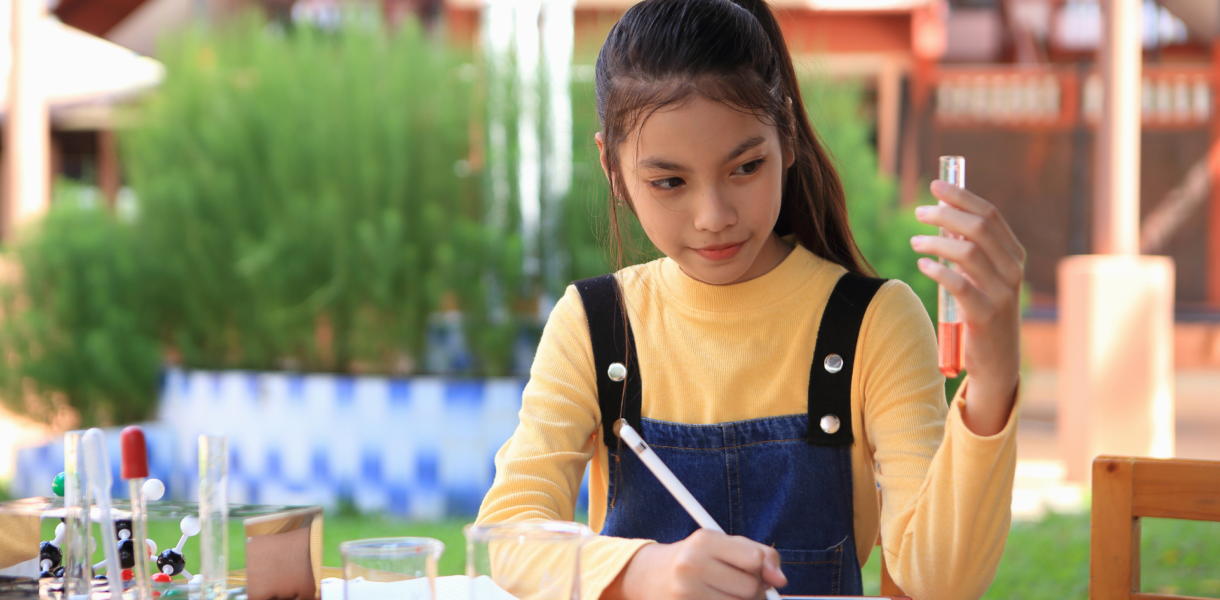
Science is an integral part of our lives; it’s everywhere we look. In our homes, our workplaces, schools and natural environment. Children react passionately to science when introduced to it in a fun, interactive fashion and parents can foster a lifelong love of the sciences in their children from a very early age.
This independent girls’ school believes all children are curious and natural learners and given the right environment, will thrive and learn quickly.
How to begin
Introducing science can begin with biology. Learning about plants and animals is something small children adore and they won’t even know they’re learning.
Take a nature walk with your child and collect natural items of interest. Here’s a list of things to look out for.

In the fields, lanes and woods
- Berries
- Nuts
- Flowers in various stages of life
- Branches with moss or lichen
- Snail shells
- Pinecones
- Empty birds eggs on the ground
- Cast off skins from adders
- Snags of sheep’s wool caught in bushes and fences
At the beach
- Shells
- Small invertebrates like crabs and shrimp
- Seaweed
- Interesting pebbles
- Seaside plants
Science is everywhere
It’s not only biology that your children will love to learn about though. Mathematical science can be fun as can technology and chemical sciences. Look out for opportunities in the home and introduce science in a fun way. Baking and cooking for example offer opportunities to learn about weights and measures in addition to chemical reactions.
Take your child out and about as much as possible. Visit all of your local museums and go further afield if possible. With science as part of their playtime, your child will grow up to have not only a natural love of science but a deeper understanding too.